Regents Theological College Celebrates 100 Years
In November 1924, George Jeffreys, founder of the Elim Pentecostal Church movement, shared his vision for an Elim Bible College.
He wrote ‘for Elim to be able to send laborer’s into the harvest field (Mt. 9:38) a training institution that could equip such workers would be necessary.’
He talked of a place where men and women could be trained and prepared for ministry, which involved learning theologically and experientially.
Jeffreys primarily wanted to prepare ministers for the Elim movement’s newly planted churches, recognising a lack of training was hindering the work of bringing people into a Spirit empowered relationship with Christ.
‘We need a training school’, he said, ‘a place where the study of the word of God can be combined with the practical side of evangelism.’
100 years later, we still share that love of the Bible, of theology and of the desire for truth. Combining this with a passion for practical effectiveness, over the years the college has also embraced a wider vision for Christian’s to study with other goals in mind.
Many do go into church work, but others into social services, youth work, chaplaincy, the caring professions, finance, large corporate institutions, and entertainment and the arts.
From those early days, we have never lost sight of the fact that our primary identity is as a worshipping community seeking to prepare people to be involved in society as witnesses to the Kingdom of God in a range of ways.
Since being established in Clapham in 1925, and as a result of ever-growing student numbers, the college has moved three times; firstly, from Clapham (1925-1965) to Capel in Surrey (1965-1987), then to Nantwich in Cheshire (1987-2009), and to date in Malvern, Worcestershire (from 2009).
Each move has brought significant developments to the College aims and objectives.
Clapham Park, London – Early Years
In April 1925 Elim Bible College, now Regents Theological College, was established by George Jeffries and EJ Phillips, the founding fathers of the Elim Pentecostal Church, in Clapham Park, London, ‘in an unostentatious manner with five students.’
Those first students were charged twenty shillings (£1) per week for board and lodgings with free tuition.
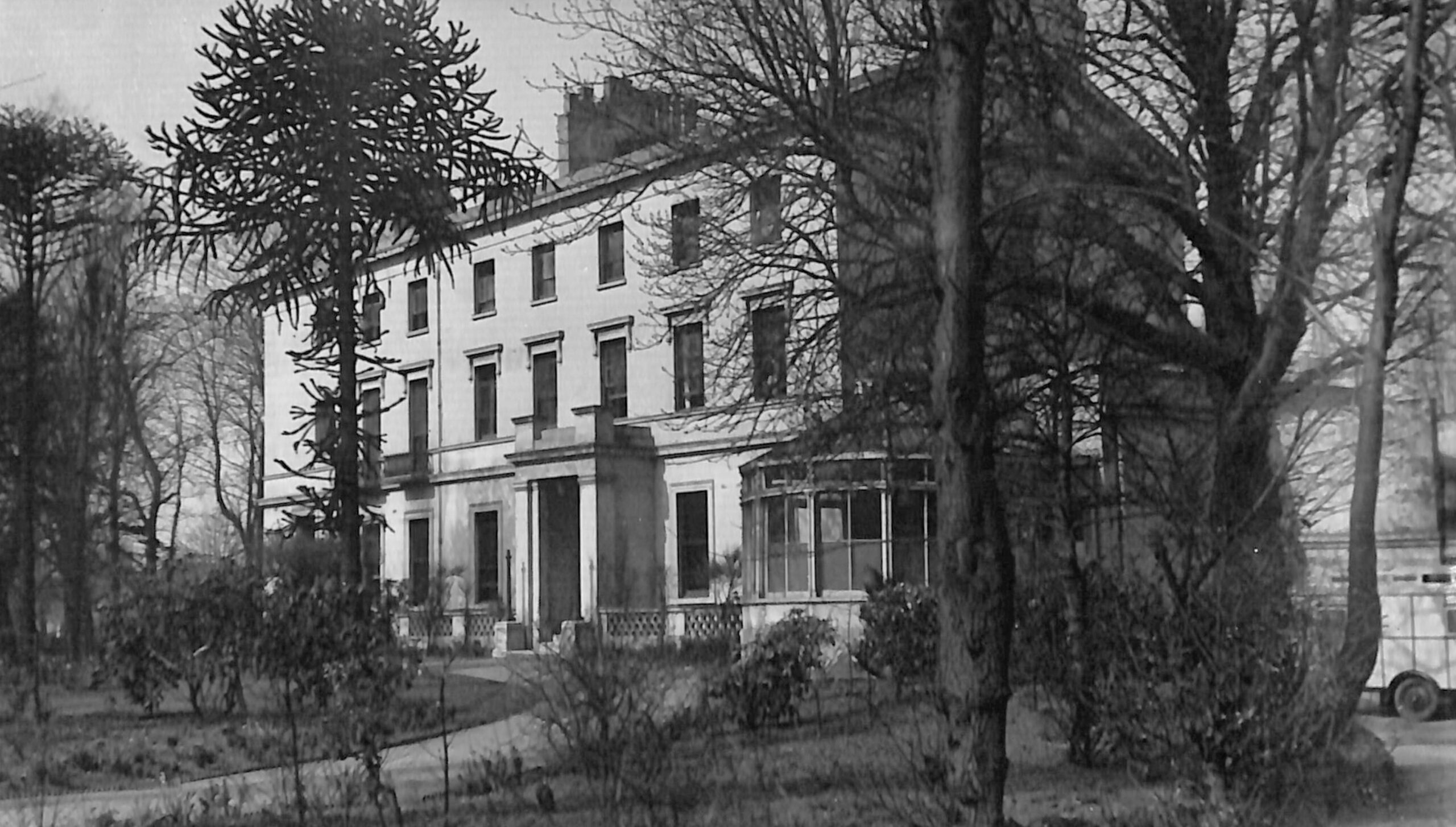
By the end of 1925, Jeffries had purchased a Catholic convent in Clapham as a more permanent base.
It was here that Jeffries’ vision was fully realised as the output of students brought into the Elim Churches ‘a cadre of ministers who were to become leaders in the movement.’
As well as being a theological college, the Clapham site became a popular holiday destination in the days when travel abroad was impossible for many people.
In the early 1960’s a compulsory purchase order was placed on the building, and so the search for a new premises was on.
Capel, Surrey – Consolidating Elim Training
After a countrywide search, a 120-year-old mock Tudor mansion was found in Capel, Surrey; and in January 1965 the college moved.
During the Capel years the curriculum was developed with students working towards the London University Diploma in Theology.
In 1975, the length of the course was extended from a two-year training programme to three, and lectures in the Old and New Testaments, systematic theology, the doctrine of the Trinity, the incarnation and the atonement were added.
Practical subjects were broadened to include homiletics, missions, pastoral ministry, counselling, youth ministry, and evangelism.
At the time some thirty permanent and visiting lecturers contributed to the teaching programmes, and Regents worked closely with other Bible colleges in the UK and across Europe as a member of the European Pentecostal Theological Association.
The campus became home to Capel Bible Week, and an English Language School was opened attracting students from across the world.
By 1987, once again the campus had become too small to accommodate the college’s numerical and academic growth as the number of students enrolling on the courses grew year-by-year.
Government policies were also emphasising the significance of university degrees becoming the gateway to most professions, and the expectations of students for their ‘campus life’ and training experience was shifting.
There was a plan to extend the Capel building, but as the college was based on green-belt land, planning permission was turned down.
Regents was on the move again…
Nantwich, Cheshire – Towards Higher Education
After another nationwide search, in 1986 the Willaston School in Nantwich, Cheshire came up for sale.
Regents approached the local council who owned the site. They were ‘delighted a new use was found for the buildings’ as they feared they would be demolished by property developers.
In June 1987 Regents moved to Nantwich.
Alongside the move, the faculty and college council evaluated the possibility of upgrading academic standards to become an externally validated institution with the result that Regents was able to offer undergraduate and postgraduate degrees in applied theology.
There was some misunderstanding about this development. Many thought an external body would decide what should be taught, but this was never, nor has been, the case.
At the same time the name was officially changed to Regents Theological College.
The new degree courses gave students options. There were compulsory modules in biblical studies, systematic theology and Christian ministry, with a choice of individual ones covering specific biblical books, Greek, Hebrew, homiletics, youth and children’s work, evangelism, church history, and new religious movements.
Nantwich set a precedent for students pursuing their ‘calling’ beyond the immediate church community and into the wider world. Many went on to serve in Elim churches and other denominations, but others took up roles in Christian organisations and charities, went into teaching, local and national government, oversees missionary and humanitarian work, to care work and as emergency responders, and into the NHS.
Nantwich was also a site where ‘academic rigour and spiritual fire came together’ in a new way.
But with a flourishing language school and an ever increasing undergraduate, postgraduate and School of Ministry student population, a change was coming.
Malvern, Worcestershire – Diversifying Tracks and Modes of Learning
With Regents Theological College based in Nantwich, and the Elim Churches headquarters in Cheltenham, the Elim National Leadership team had in mind to bring the two together in one location.
In 2007, Elim purchased Malvern Girls School in the Malvern Hills. As a former boarding school, the site had everything necessary for a Regents campus. There was student accommodation, lecture rooms, a theatre and 35 acres of grounds with playing fields, tennis courts and an outside hearted swimming pool. The school also had amble office space for the Elim headquarters, with enough room to set-up a purpose-built conference centre.
After upgrading and a refurbishment plan, Regents Theological College new site was opened in 2009.
Alongside the physical move, Regents undergraduate programmes saw further development into three tracks – theology, church leadership, and youth ministry, and a unique degree in the higher education landscape of Applied Theology and the Performing arts was launched.
These new developments had the effect of attracted a broader demographic of students from different church and parachurch backgrounds, bringing a 50/50 split between Elim and other denominations.
The postgraduate programmes were developed to include specialist modules in chaplaincy and whole-life discipleship, and all the degrees were open to student funding and means tested maintenance awards.
PhD students were jointly supervised by the Regents faculty in partnership with Bangor University’s Centre for Pentecostal and Charismatic Studies.
The college also started teaching one module at a time over a five-week block. The first week was taken up with intense lectures, followed by four weeks of further self-study with complemented by online seminars. Assessments were then submitted at the end of the five-week block.
This modular approach proved to be a far more effective teaching-learning method.
Student numbers increased once again, and as the new five-week model became established, Regents launched its campus-context mode of study as a way for students to complete an undergraduate degree.
Studying ‘in context’ gave them the opportunity to study full-time without having to leave their home setting. This was a particular advantage for those with significant work, church and/or family commitments.
Regents continues to teach in this way today.
Context students come up to Regents to join those on campus for the week of face-to-face teaching, returning home for the following four weeks of self-study with online seminars, and as with campus students, submit their assessment for each module at the end of the five-week block. The next teaching week then takes place, and the process starts again.
This modular system has encouraged students to be far for responsible for managing their time with an increased focus on them becoming interdependent and independent learners.
Along with a number of staff publications, in recent years Regents has continued to extend its voice and contribution into academia through the establishment of the Institute for Pentecostal Theology, a group of theologians researching and working in the Pentecostal tradition.
The college also launched Regents LIFE, a series of short online courses, aiming to help church members connect aspects of theology with everyday life.
As a Christian community our emphasis on a shared devotional and discipleship focus has never diminished. Both staff and students continue to share their discipleship journey together, as ‘iron sharpens iron’ from a Pentecostal and charismatic point-of-view.
A hundred years later George Jeffries’ underlying desire of bringing people into a deeper relationship with Christ through studying theology remains the same.
We are genuinely thankful to God for all that has been achieved; through the times of abundance and those of crisis and trial, God has remained constant and always made a way forward.
Obedience is the watch-word.